

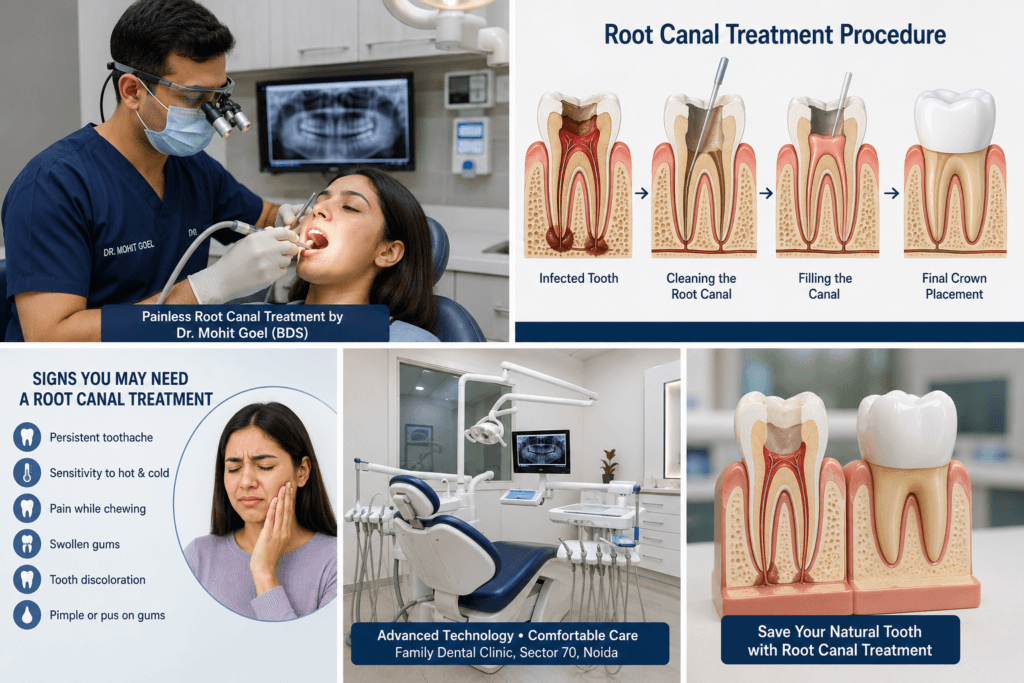
Are you suffering from severe tooth pain, sensitivity to hot or cold foods, or swelling around a tooth? You may need a Root Canal Treatment (RCT) to save your natural tooth and eliminate the infection.
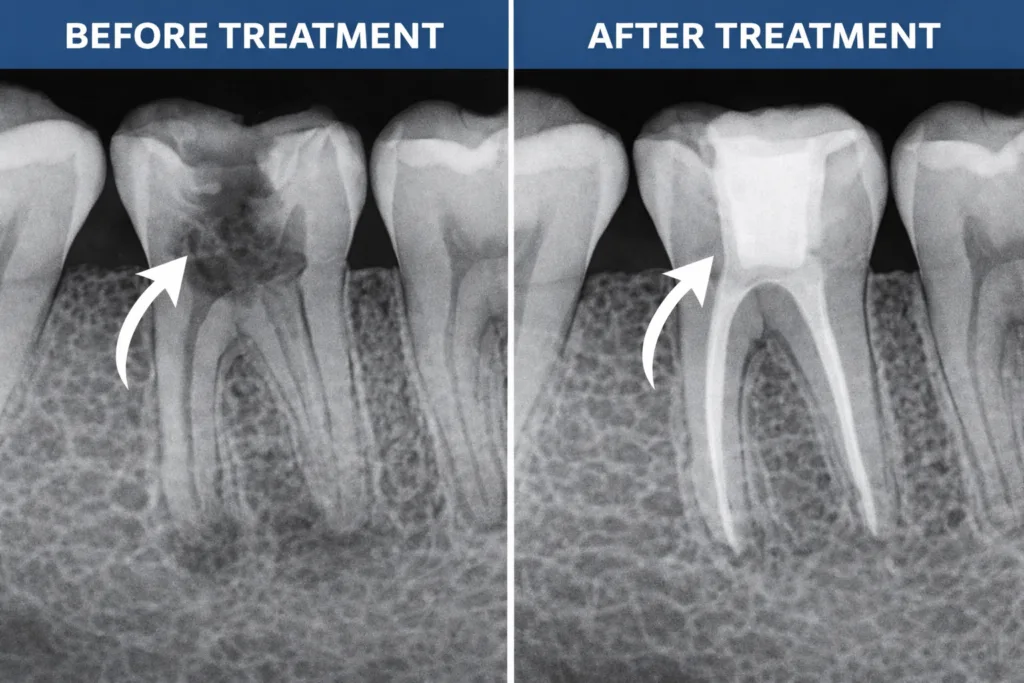
If you’re looking for a trusted dentist for Root Canal Treatment in Sector 70 Noida, Family Dental Clinic Multispeciality Centre offers advanced, comfortable, and affordable RCT using modern rotary endodontics, digital RVG X-rays, and apex locator technology. Our goal is simple—save your natural tooth whenever possible while making the treatment as painless and stress-free as possible.
Led by Dr. Mohit Goel (BDS, 13+ Years of Clinical Experience), our clinic has helped hundreds of patients from Sector 70, Sector 71, Sector 72, Sector 73, Sector 75, Sector 120, Sector 121, Sector 122, and nearby areas regain their oral health without unnecessary tooth extractions.
Unlike years ago, modern root canal treatment is usually no more uncomfortable than getting a dental filling. Most patients are pleasantly surprised by how smooth and comfortable the procedure is.
Whether you’re experiencing unbearable tooth pain or have been advised to undergo RCT after an X-ray, this comprehensive guide explains everything you need to know—including symptoms, procedure, cost, recovery, benefits, and frequently asked questions.
What is Root Canal Treatment (RCT)?
Root Canal Treatment (RCT), also known as endodontic treatment, is a dental procedure performed to remove infected or damaged pulp from inside a tooth while preserving the natural tooth structure.
Every tooth contains a soft tissue called the dental pulp, which houses nerves, blood vessels, and connective tissue. When bacteria enter this area because of deep cavities, cracks, trauma, or repeated dental procedures, the pulp becomes inflamed or infected.
If left untreated, the infection can spread to the surrounding bone, causing severe pain, swelling, pus formation, and eventually tooth loss.
During a root canal procedure, the infected pulp is carefully removed, the canals are cleaned and disinfected, and the space is sealed with a biocompatible material called Gutta-Percha. In most cases, the tooth is then restored with a crown to regain its strength and function.
The biggest advantage of RCT is that it saves your natural tooth, allowing you to chew comfortably without the need for extraction or replacement.
Signs You May Need a Root Canal
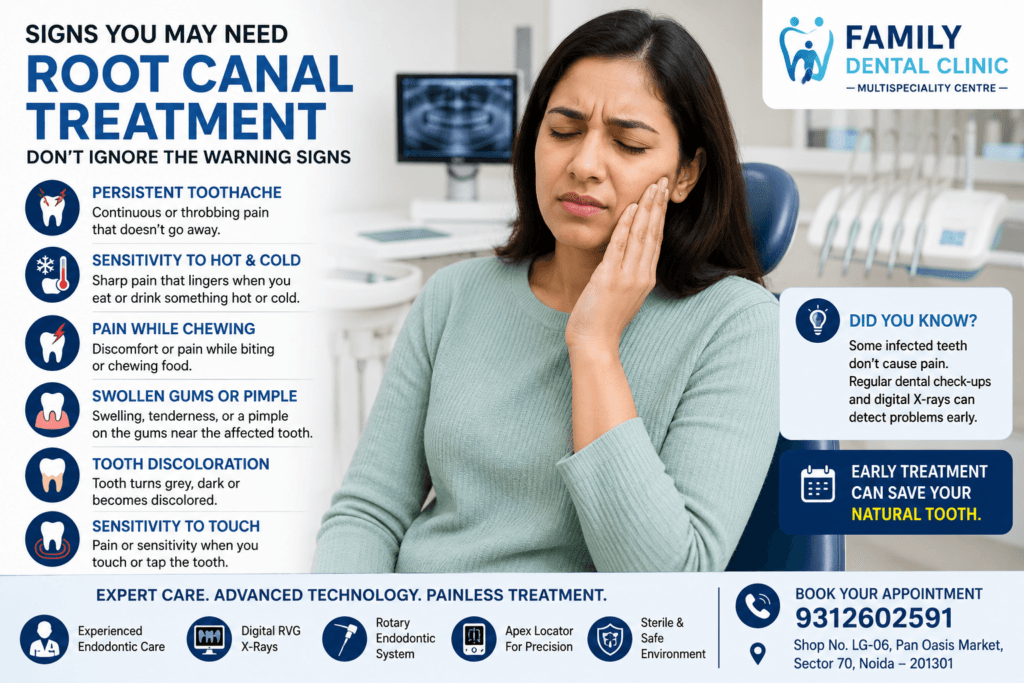
Many patients ignore early symptoms, assuming the pain will disappear on its own. Unfortunately, once the pulp becomes infected, the condition usually worsens over time.
You should consult a dentist immediately if you experience any of the following symptoms:
Persistent Toothache
Continuous or throbbing pain that lasts for several hours or wakes you up at night is one of the most common signs of pulp infection.
Sensitivity to Hot and Cold
If pain continues for several seconds or minutes after drinking hot tea, coffee, or cold beverages, the nerve inside the tooth may be inflamed.
Pain While Chewing
Pain during biting or chewing often indicates inflammation around the root tip.
Swollen Gums
A swollen or tender gum near a painful tooth may indicate the presence of an abscess or infection.
Pimple on the Gums
A small boil or pimple-like swelling that occasionally releases pus is a common sign of a chronic dental infection.
Tooth Discoloration
A tooth that gradually becomes grey, brown, or dark may indicate loss of blood supply to the pulp.
Broken Tooth with Pain
A fractured or cracked tooth can expose the pulp to bacteria, resulting in infection.
Can You Need a Root Canal Without Pain?
Yes.
One of the biggest misconceptions is that every infected tooth hurts.
In our daily practice at Family Dental Clinic, we often diagnose infected teeth during routine dental check-ups—even when patients report no pain at all.
Digital RVG X-rays help detect hidden infections before they become severe.
This is one reason why regular dental examinations every six months are highly recommended.
Common Causes of Root Canal Infection
Several conditions can damage the pulp inside a tooth.
The most common causes include:
- Deep dental cavities
- Untreated tooth decay
- Cracked or fractured teeth
- Large old fillings
- Dental trauma
- Repeated dental procedures on the same tooth
- Severe tooth wear
- Gum infection reaching the root
Ignoring these problems allows bacteria to multiply inside the tooth, eventually requiring more extensive treatment.
What Happens If You Delay Root Canal Treatment?
Many patients postpone treatment because they fear pain or hope the problem will resolve on its own.
Unfortunately, delaying treatment usually leads to:
- Increased pain
- Facial swelling
- Dental abscess
- Bone infection
- Tooth fracture
- Tooth extraction
- More expensive treatment later
Saving a tooth early is almost always easier, faster, and more affordable than replacing a lost tooth with an implant or bridge.
How is Root Canal Treatment Performed?
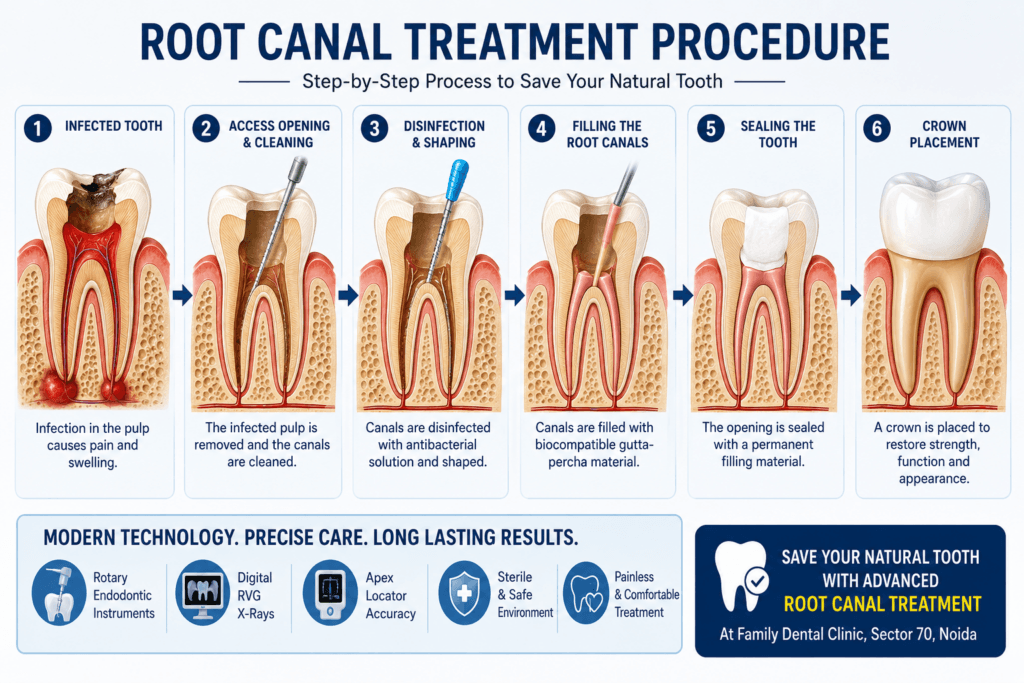
At Family Dental Clinic, Sector 70 Noida, every treatment begins with a thorough clinical examination.
Our focus is not only on removing infection but also on preserving as much healthy tooth structure as possible.
The treatment generally involves the following steps.
Step 1 – Clinical Examination
The dentist evaluates your symptoms, examines the tooth, and performs necessary diagnostic tests.
Digital RVG X-rays help determine:
- Number of canals
- Infection severity
- Root anatomy
- Bone condition
This allows us to plan the safest and most effective treatment.
Step 2 – Local Anaesthesia
The affected tooth is completely numbed using local anaesthesia.
Most patients report that they feel pressure during the procedure but little to no pain.
Modern anaesthetic techniques have made root canal treatment much more comfortable than many people expect.
Step 3 – Isolation of the Tooth
The tooth is isolated to maintain a clean treatment field and prevent contamination from saliva.
Maintaining a sterile environment significantly improves the long-term success of the procedure.
Step 4 – Cleaning the Root Canals
A small opening is created on the biting surface of the tooth.
Using advanced rotary endodontic instruments, the infected pulp is carefully removed from inside the canals.
The canals are then shaped to prepare them for sealing.
Step 5 – Disinfection
Special antibacterial irrigating solutions are used to eliminate bacteria from areas that cannot be reached by instruments alone.
Thorough cleaning is one of the most important steps for long-term success.
Step 6 – Filling the Root Canals
Once the canals are completely clean and dry, they are filled with Gutta-Percha, a biocompatible material that seals the canals and prevents reinfection.
Step 7 – Final Restoration
After root canal treatment, the tooth is restored with a permanent filling.
For most premolars and molars, a dental crown is recommended to protect the tooth from fracture and restore full chewing function.
Without a crown, a root canal-treated back tooth is more likely to crack under normal biting forces.
Is Root Canal Treatment Painful?
This is the question we hear most often.
The answer is No.
Modern root canal treatment is designed to relieve pain—not cause it.
Thanks to advanced anaesthetic techniques and modern rotary equipment, the procedure is usually comparable to getting a routine filling.
In fact, most patients tell us afterwards:
“I wish I had done it earlier.”
Root Canal Treatment Cost in Sector 70 Noida
One of the first questions patients ask is:
“How much does a root canal treatment cost in Noida?”
The answer depends on several factors, including the type of tooth, the number of root canals, the severity of infection, and whether a dental crown is required afterward.
At Family Dental Clinic Multispeciality Centre, we believe in transparent pricing. Before starting treatment, we explain the procedure, expected cost, and available treatment options so there are no surprises.
Estimated Root Canal Treatment Cost
| Treatment | Approximate Cost |
|---|---|
| Front Tooth Root Canal | ₹3,000 – ₹4,000 |
| Premolar Root Canal | ₹3,500 – ₹4,000 |
| Molar Root Canal | ₹4,000 – ₹5,000 |
| Re-Root Canal (Retreatment) | ₹5,000 – ₹6,000+ |
| Dental Crown | ₹2,500 – ₹15,000 |
Note: The exact cost can only be determined after a clinical examination and digital RVG X-ray.
Factors That Affect Root Canal Cost
Several factors influence the overall treatment cost.
Type of Tooth
Front teeth usually have one canal, making treatment simpler.
Molars often have three or four canals, requiring more time and precision.
Severity of Infection
Long-standing infections, pus formation, or swelling may require additional appointments and medication.
Previous Root Canal Treatment
A failed root canal performed elsewhere often requires retreatment, which is more complex.
Type of Crown
After treatment, patients can choose from different crown materials depending on aesthetics, durability, and budget.
Single Sitting vs Multiple Sitting Root Canal
Many patients ask whether root canal treatment can be completed in one visit.
The answer depends on the condition of the tooth.
Single Sitting Root Canal
Suitable when:
- Infection is limited
- No swelling is present
- Canals are dry
- Tooth structure is adequate
Benefits include:
- One appointment
- Less time off work
- Immediate relief
- Fewer clinic visits
Multiple Sitting Root Canal
Recommended when:
- Severe infection is present
- Pus is draining
- Swelling exists
- Complex root anatomy requires additional cleaning
In these situations, medication is placed inside the canals between visits to eliminate bacteria before final sealing.
At Family Dental Clinic, the decision is always based on what provides the highest long-term success—not simply completing treatment quickly.
Is a Dental Crown Necessary After Root Canal Treatment?
In many cases, yes.
A root canal removes infected pulp from inside the tooth. Although this saves the tooth, it also leaves it weaker than before.
Back teeth experience significant chewing pressure every day.
Without adequate protection, they may fracture.
For this reason, we strongly recommend a crown for most premolars and molars after root canal treatment.
Benefits of a Crown After Root Canal
- Protects the tooth from fracture
- Restores chewing efficiency
- Improves appearance
- Increases long-term success
- Allows normal eating
A properly fitted crown can help a root canal-treated tooth function comfortably for many years with good oral hygiene.
How Long Does Root Canal Treatment Take?
Most routine cases take 45–90 minutes.
Simple cases may be completed in one visit.
More complicated infections may require two appointments spaced a few days apart.
The exact treatment duration depends on:
- Number of canals
- Infection severity
- Tooth position
- Previous dental work
- Root anatomy
Recovery After Root Canal Treatment
Recovery is generally straightforward.
Many patients return to work, school, or normal activities on the same day.
You may experience mild tenderness for a few days, especially while chewing.
This discomfort is temporary and usually responds well to prescribed medication.
Recovery Timeline
First 24 Hours
- Mild soreness is normal.
- Avoid chewing until the numbness wears off.
- Take medicines as prescribed.
First Week
- Chewing gradually becomes comfortable.
- Soft foods are recommended if tenderness persists.
- Maintain excellent oral hygiene.
After Crown Placement
Once the permanent crown is fitted, most patients can eat normally and use the treated tooth confidently.
Aftercare Tips Following Root Canal Treatment
Following a few simple precautions can significantly improve long-term success.
Do
✔ Brush twice daily.
✔ Floss regularly.
✔ Take prescribed medicines.
✔ Attend follow-up appointments.
✔ Get the permanent crown placed on time.
✔ Visit your dentist every six months.
Avoid
✘ Chewing hard foods on the treated tooth before crown placement.
✘ Ignoring persistent pain or swelling.
✘ Delaying the permanent restoration.
✘ Using the treated tooth to crack nuts or bite hard objects.
What Happens If You Don’t Get a Crown?
Some patients feel comfortable after the root canal and postpone the crown.
This can be risky.
Without protection, the remaining tooth structure may fracture.
If the crack extends below the gum line, the tooth may no longer be restorable and could require extraction.
Getting a crown soon after your dentist recommends it helps preserve the treated tooth for the long term.
Benefits of Saving Your Natural Tooth
Whenever possible, preserving your natural tooth is the best option.
Root canal treatment offers several important advantages over extraction.
Maintains Natural Chewing
Your own tooth provides the most natural biting and chewing experience.
Preserves Jaw Bone
Keeping the natural tooth root helps maintain bone support and facial structure.
Prevents Tooth Movement
Neighbouring teeth are less likely to drift into the empty space, reducing the risk of bite problems.
More Cost-Effective Long-Term
Replacing an extracted tooth with a bridge or implant is often more expensive than saving it with root canal treatment.
Natural Appearance
When restored with a well-made crown, a root canal-treated tooth blends seamlessly with your smile.
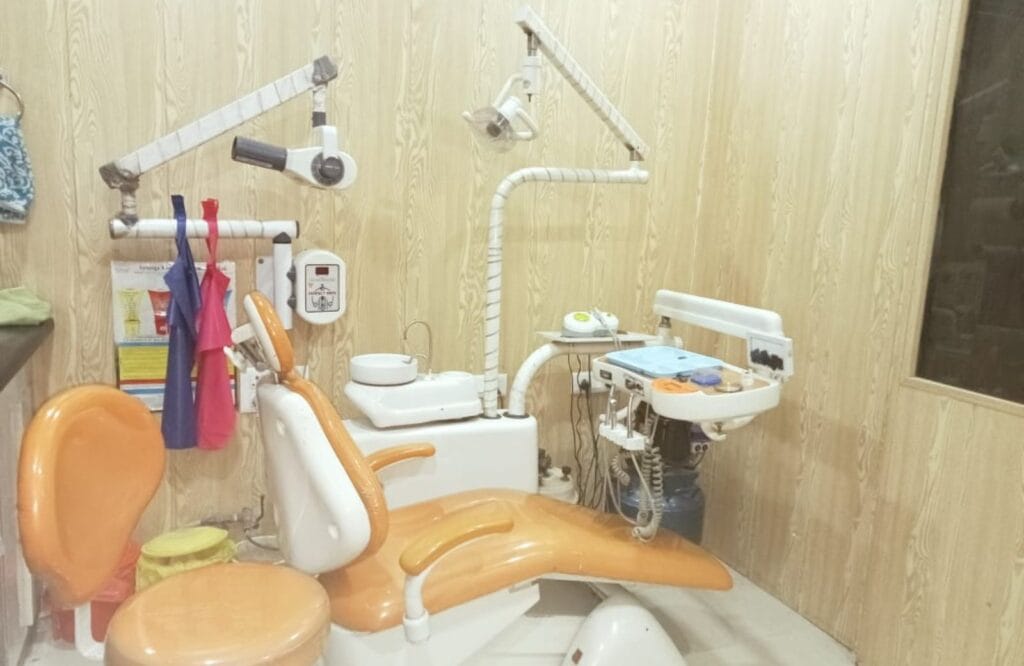
Why Choose Family Dental Clinic for Root Canal Treatment in Sector 70 Noida?
Choosing the right dentist plays a major role in the success of root canal treatment.
At Family Dental Clinic Multispeciality Centre, we focus on accurate diagnosis, modern technology, patient comfort, and ethical treatment planning.
Experienced Dentist
Your treatment is performed by Dr. Mohit Goel (BDS, 13+ Years of Clinical Experience), who has managed a wide range of routine and complex endodontic cases.
Modern Technology
We use advanced equipment, including:
- Digital RVG X-rays
- Rotary Endodontic System
- Apex Locator
- LED Curing Units
- Ultrasonic Scalers
- Class B Autoclave Sterilization
Modern technology improves precision, efficiency, and patient comfort.
Patient-Centred Care
We explain every treatment option clearly before starting, answer your questions, and recommend only what is clinically necessary.
Strict Sterilization Protocols
Patient safety is our priority.
All instruments undergo proper sterilization, and disposable items are used wherever appropriate.
Convenient Location
Our clinic is conveniently located at:
Shop No. LG-06, Pan Oasis Market, Sector 70, Noida
We regularly welcome patients from:
- Sector 70
- Sector 71
- Sector 72
- Sector 73
- Sector 75
- Sector 76
- Sector 120
- Sector 121
- Sector 122
- Noida Extension
Book Your Root Canal Consultation
If you have persistent tooth pain, swelling, or sensitivity, don’t wait until the infection worsens.
Early diagnosis often means simpler treatment, faster recovery, and a better chance of saving your natural tooth.
Call: 9312602591
WhatsApp: 9312602591
Clinic: Family Dental Clinic Multispeciality Centre, Shop No. LG-06, Pan Oasis Market, Sector 70, Noida
Frequently Asked Questions About Root Canal Treatment
Is Root Canal Treatment painful?
No. Modern root canal treatment is generally no more uncomfortable than getting a routine dental filling. Local anaesthesia completely numbs the tooth, so you should not feel pain during the procedure. You may experience mild soreness for a day or two afterward, which is usually manageable with prescribed medication.
How many visits are required for a root canal?
Many uncomplicated cases can be completed in a single visit. However, if there is significant infection, swelling, or complex root anatomy, two or more visits may be recommended to ensure complete cleaning and healing.
How much does Root Canal Treatment cost in Sector 70 Noida?
The cost depends on the tooth being treated, the complexity of the infection, and whether a crown is required.
Typical price range:
Front Tooth: ₹3,000–₹4,000
Premolar: ₹3,500–₹4,000
Molar: ₹4,000–₹5,000
A consultation and digital RVG X-ray help determine the exact treatment plan.
Can I eat after Root Canal Treatment?
Yes, but wait until the numbness wears off. Until the permanent restoration or crown is placed, avoid chewing hard foods on the treated side to reduce the risk of fracture.
Is a crown always required after Root Canal Treatment?
A crown is strongly recommended for most premolars and molars because these teeth experience heavy chewing forces. Front teeth may not always require a crown if sufficient healthy tooth structure remains.
How long does a root canal-treated tooth last?
With proper oral hygiene, regular dental check-ups, and a well-fitted crown when indicated, a root canal-treated tooth can function for many years and, in many cases, for decades.
Can a root canal fail?
Although root canal treatment has a high success rate, failure can occur if:
Hidden canals remain untreated
New decay develops
The tooth fractures
The final restoration leaks
Oral hygiene is poor
If this happens, retreatment or other procedures may be recommended.
What happens if I ignore an infected tooth?
Ignoring an infected tooth may lead to:
Severe pain
Swelling
Dental abscess
Bone infection
Tooth loss
Spread of infection to surrounding tissues
Early treatment usually prevents these complications.
Is tooth extraction better than Root Canal Treatment?
Whenever possible, preserving your natural tooth is generally the preferred option. Root canal treatment allows you to keep your natural tooth, maintain normal chewing function, and avoid the additional procedures often needed after extraction.
Can Root Canal Treatment be done during pregnancy?
Dental emergencies, including severe tooth infections, should not be ignored during pregnancy. The safest treatment plan depends on the stage of pregnancy and should be decided after consultation with both your dentist and obstetrician.
Will I need antibiotics before Root Canal Treatment?
Not every patient requires antibiotics. They are typically prescribed only when there is significant swelling, spreading infection, or other clinical indications.
How long does the procedure take?
Most treatments take approximately 45 to 90 minutes, depending on the number of canals and the complexity of the case.
Can I go to work after a Root Canal?
Yes. Most patients return to work or their normal daily routine on the same day, although strenuous chewing on the treated tooth should be avoided until advised by your dentist.
Why does a tooth need Root Canal Treatment?
The most common reasons include:
Deep cavities
Cracked teeth
Trauma
Repeated dental procedures
Infection reaching the pulp
How can I avoid needing a Root Canal?
Good oral hygiene and regular dental visits greatly reduce the risk.
Simple habits include:
Brushing twice daily
Flossing regularly
Limiting sugary foods and drinks
Treating cavities early
Visiting your dentist every six months
Common Myths About Root Canal Treatment
Myth 1: Root canals are extremely painful.
Fact: Modern techniques and local anaesthesia make the procedure comfortable for most patients.
Myth 2: Tooth extraction is always a better option.
Fact: Saving your natural tooth is usually the best long-term solution whenever it is clinically possible.
Myth 3: Root canal-treated teeth always become weak.
Fact: When properly restored, especially with a crown when indicated, these teeth can continue to function effectively for many years.
Myth 4: Antibiotics can replace Root Canal Treatment.
Fact: Antibiotics may help control the spread of infection but cannot remove infected pulp from inside the tooth. Mechanical cleaning of the canals is necessary.
Quick Answers
What is Root Canal Treatment?
Root Canal Treatment removes infected pulp from inside a tooth, disinfects the canals, seals them with a biocompatible material, and restores the tooth to preserve its function.
Is Root Canal Treatment painful?
Modern root canal treatment is generally comfortable because the tooth is numbed using local anaesthesia before the procedure begins.
How much does Root Canal Treatment cost?
The cost generally ranges from ₹3,000 to ₹6,000, depending on the tooth and treatment complexity. A crown, if needed, is charged separately.
How long does Root Canal Treatment take?
Most cases are completed in 45–90 minutes, although some teeth require more than one visit.
Can I avoid tooth extraction with Root Canal Treatment?
In many cases, yes. Root canal treatment is specifically designed to save infected natural teeth that might otherwise require extraction.
Why Early Treatment Matters
Delaying treatment often allows the infection to spread, increasing the risk of pain, swelling, fracture, and tooth loss.
Seeking treatment as soon as symptoms appear gives the best chance of preserving your natural tooth with a predictable outcome.
Related Dental Services
You may also be interested in:
- Dental Crowns and Bridges
- Tooth-Coloured Fillings
- Dental Implants
- Wisdom Tooth Removal
- Teeth Cleaning and Scaling
- Smile Makeover
- Pediatric Dentistry
- Full Mouth Rehabilitation
- Emergency Dental Care
- Cosmetic Dentistry
Serving Patients Across Noida
Family Dental Clinic Multispeciality Centre proudly serves patients from:
- Sector 70
- Sector 71
- Sector 72
- Sector 73
- Sector 74
- Sector 75
- Sector 76
- Sector 77
- Sector 78
- Sector 79
- Sector 120
- Sector 121
- Sector 122
- Noida Extension
- Greater Noida West
Patients also visit us from nearby residential societies, schools, and business hubs because of our convenient location in Pan Oasis Market, Sector 70, Noida.
Why Trust This Information?
This guide has been written to help patients understand Root Canal Treatment in simple, accurate language before making treatment decisions.
The information is based on:
- Current principles of endodontic treatment
- Evidence-based dental practices
- Clinical experience in diagnosing and treating root canal infections
- Recommendations from recognized dental organizations
Every patient is different. A clinical examination and dental X-ray are necessary before confirming the most appropriate treatment.
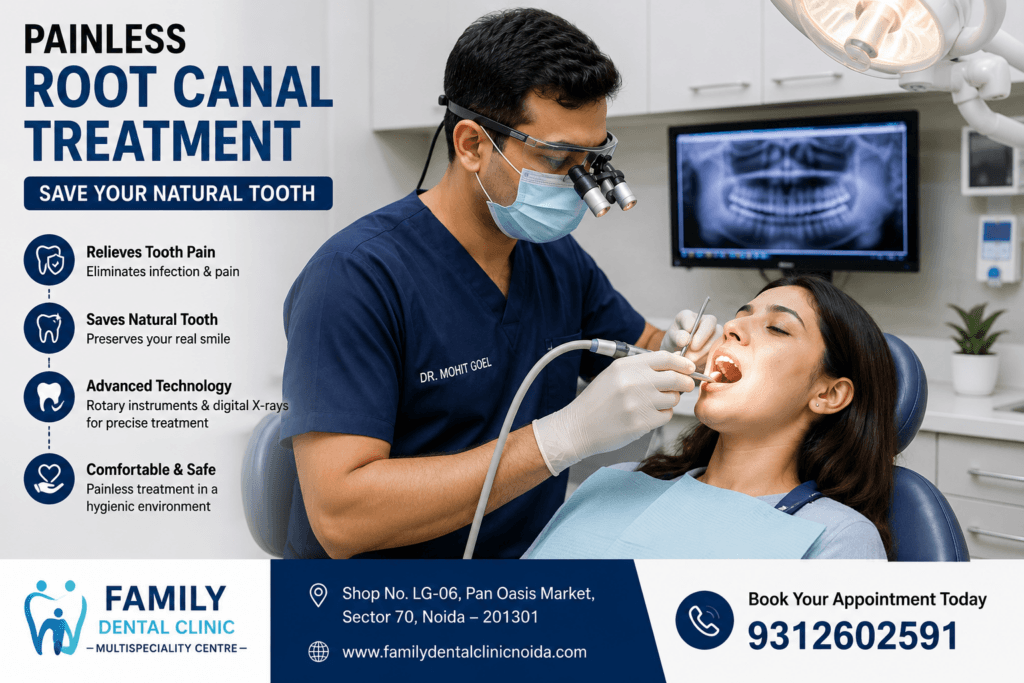
About the Author
Dr. Mohit Goel (BDS)
Founder & Chief Dental Surgeon
Family Dental Clinic Multispeciality Centre
Sector 70, Noida
Dr. Mohit Goel is a practicing dental surgeon with 13+ years of clinical experience in preventive, restorative, cosmetic, and family dentistry. His approach focuses on preserving natural teeth whenever possible through early diagnosis and minimally invasive treatment.
His clinical interests include:
- Root Canal Treatment
- Dental Crowns & Bridges
- Cosmetic Dentistry
- Smile Designing
- Dental Implants
- Tooth-Coloured Fillings
- Preventive Dentistry
- Family Dental Care
He regularly treats patients from Sector 70, Sector 71, Sector 72, Sector 73, Sector 75, Sector 120, Sector 121, Sector 122, Noida Extension, and surrounding areas.
Why Choose Family Dental Clinic?
Patients choose us because we focus on honest advice, quality treatment, and patient comfort.
✔ Experienced Dentist
Treatment by Dr. Mohit Goel (BDS) with 13+ years of clinical experience.
✔ Modern Equipment
Our clinic uses modern dental technology including:
- Digital RVG X-rays
- Rotary Endodontic System
- Apex Locator
- LED Curing Units
- Ultrasonic Scaling
- Class B Autoclave Sterilization
✔ Transparent Treatment Planning
We explain every procedure, discuss treatment options, answer your questions, and provide a clear estimate before starting treatment.
✔ Comfortable Patient Experience
We understand that many people feel anxious about dental treatment. Our team focuses on making every visit as comfortable and stress-free as possible.
✔ Convenient Location
Family Dental Clinic Multispeciality Centre
Shop No. LG-06
Pan Oasis Market
Sector 70, Noida – 201301
Easy access from:
- Sector 70
- Sector 71
- Sector 72
- Sector 73
- Sector 74
- Sector 75
- Sector 76
- Sector 77
- Sector 78
- Sector 79
- Sector 120
- Sector 121
- Sector 122
- Greater Noida West
Book Your Appointment Today
Don’t ignore persistent tooth pain or swelling. Early treatment can often save your natural tooth and prevent more complex dental problems.
Schedule Your Consultation
📞 Call: 9312602591
📱 WhatsApp: 9312602591
🌐 Website: https://familydentalclinicnoida.com
📍 Clinic Address:
Family Dental Clinic Multispeciality Centre
Shop No. LG-06
Pan Oasis Market
Sector 70, Noida – 201301
Clinic Hours
Monday – Sunday
10:00 AM – 9:00 PM
References
For additional information on Root Canal Treatment, refer to:
Detailed guide to root canal treatment, including the procedure, benefits, and cost considerations. For readers in Nagercoil looking for local dental care, this dental hospital in Nagercoil may be worth exploring.